LR44 Batteries
Share
$2.00
Buy and save
Buy and earn $0.02 Loyalty for your next purchase
Loyalty is a discount program that lets you buy products and earn points to redeem on your next purchase. Your Loyalty balance is updated when you pay online or in-store. The Loyalty amount shown on this page can be recalculated at the checkout.
In stock: 1 available
Have questions?
Product details
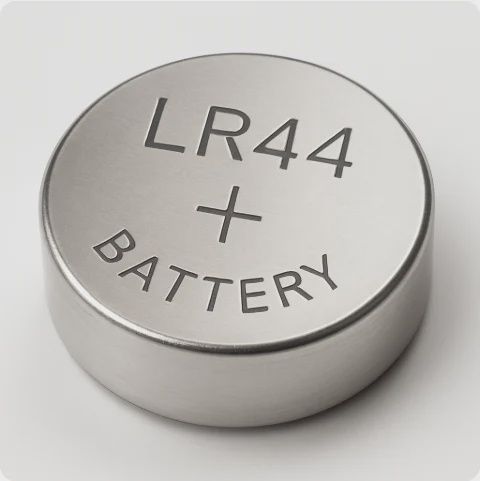
The LR44 battery is a widely used alkaline button cell with a nominal voltage of 1.5 volts and a compact form factor, making it ideal for powering small electronic devices. Also known by several equivalent names such as AG13, A76, L1154, and 157, this battery type is interchangeable with various manufacturer codes due to its standardized size—11.6 mm in diameter and 5.4 mm in height.
LR44 batteries are commonly found in devices that require low to moderate power over extended periods, including digital thermometers, calculators, laser pointers, watches, toys, and computer motherboards. Their alkaline chemistry, based on zinc and manganese dioxide (Zn/MnO₂), delivers reliable performance and stable output across a wide temperature range, typically from -10°C to 60°C.
Thanks to their high energy density, lightweight construction, and cost-effectiveness, LR44 batteries are a go-to power source for both consumer and industrial applications. While they share the same size as some silver oxide batteries like SR44, 357, and 303, it's essential to note the difference in chemistry and discharge characteristics. Using the correct chemistry ensures device compatibility and avoids risks like underperformance or premature battery drain.
In summary, the LR44 is a versatile and dependable battery option. However, always verify the voltage, chemistry, and size requirements of your device before choosing a replacement—even when the batteries appear physically identical.
LR44 Batteries
Share